Putting the Kitchen Garden to Bed for Winter
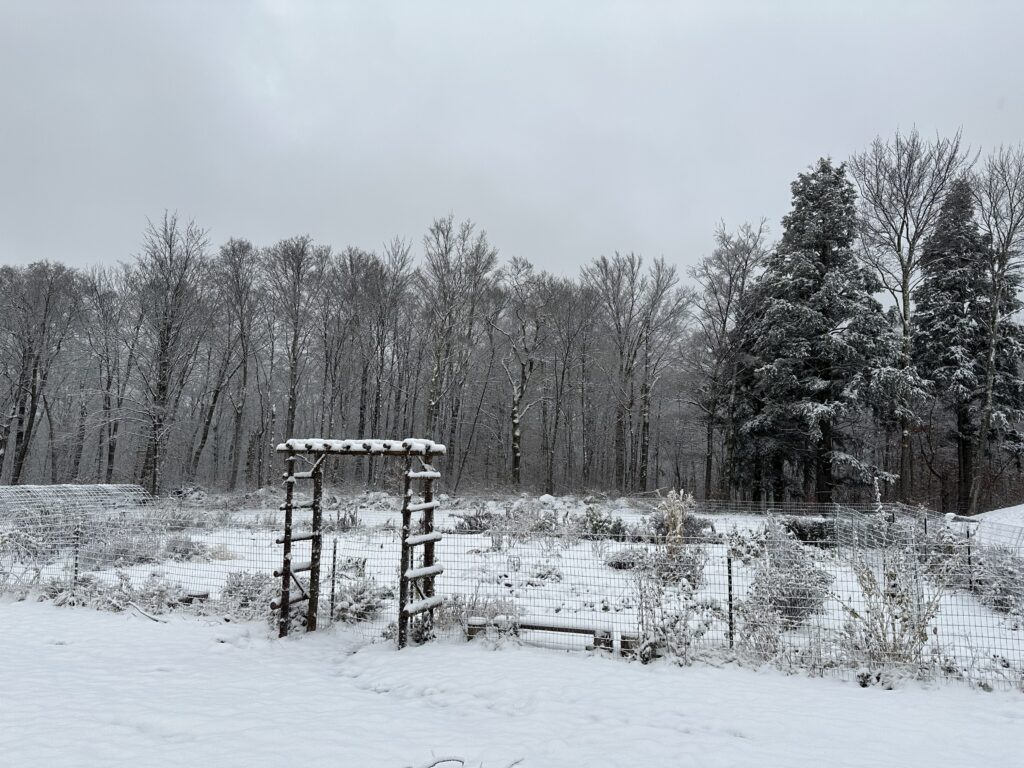
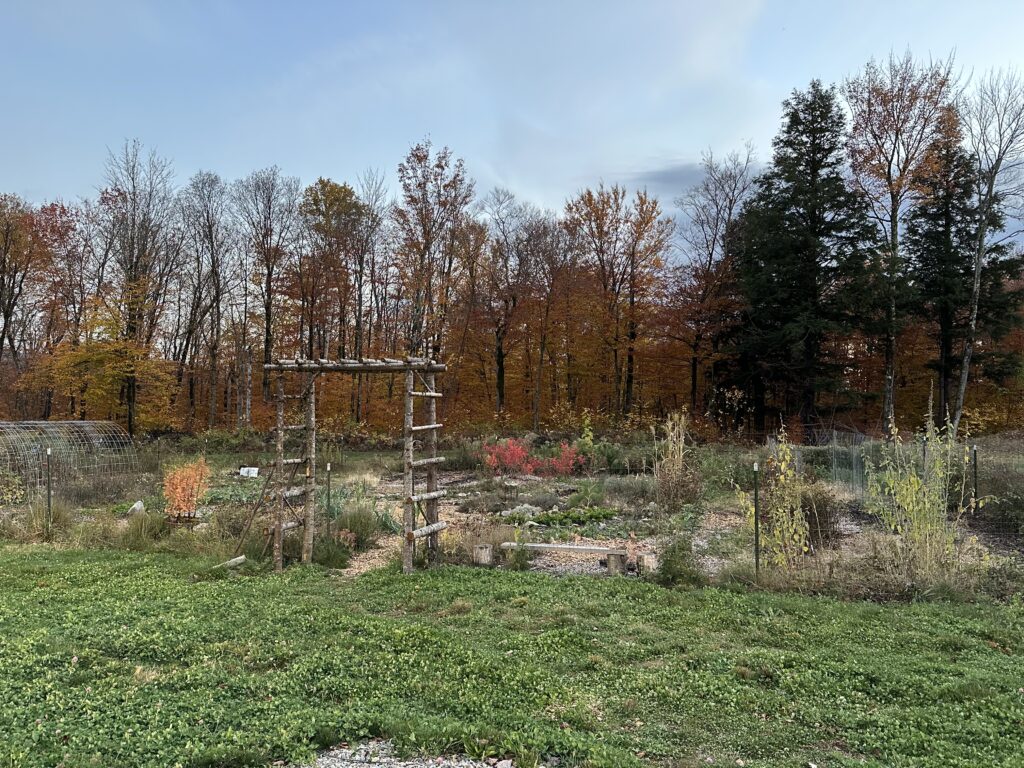
Winter is in full swing here and we have had snow on the ground since late October. Before all of the snow came we worked on putting the garden to bed. We refer to this time as putting the gardens to bed because we clean up and then cover the soil in the beds. We do not remove all of the spent plant material, some is left for various pollinators and insects to overwinter in and some is left for the birds to eat. Once the beds are cleaned up and ready we cover them with compost and used shavings from the chicken coop.
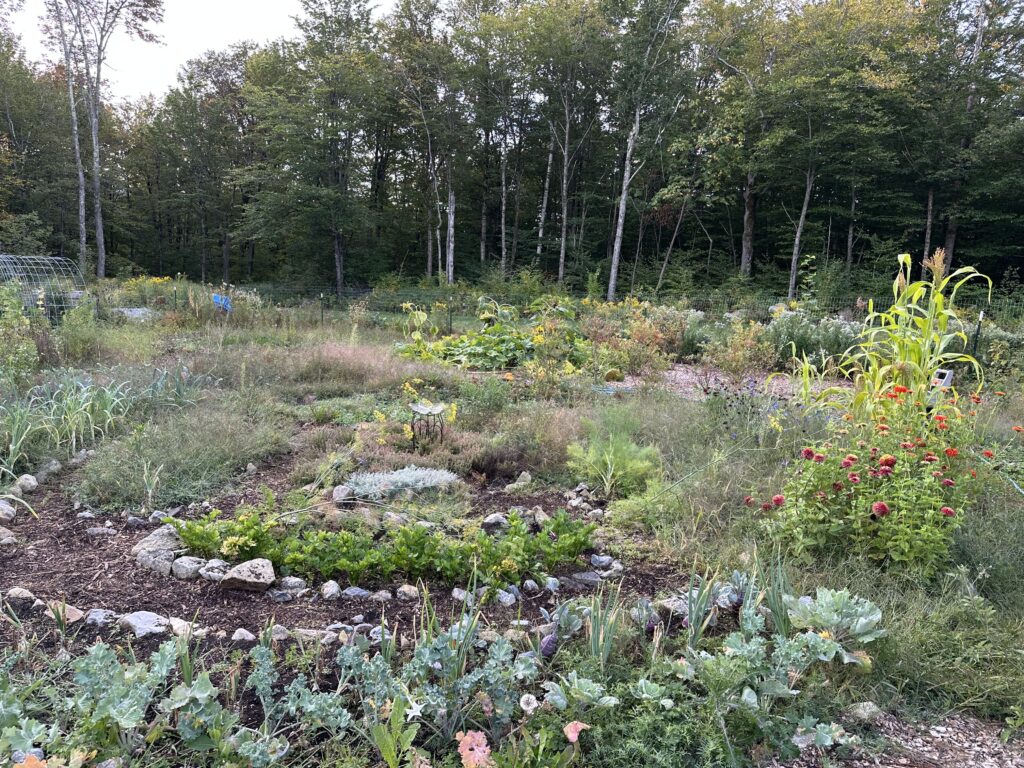
The inputs from the chicken coop add beneficial nutrients to the beds and provide cover through the winter when there are not many plants or root systems in the soil. This includes the pine shavings, chicken manure, feathers from the chickens (especially when they are molting!), and remnants of their pellet food. The pellets that we give them are alfalfa based and that helps to feed the soil.
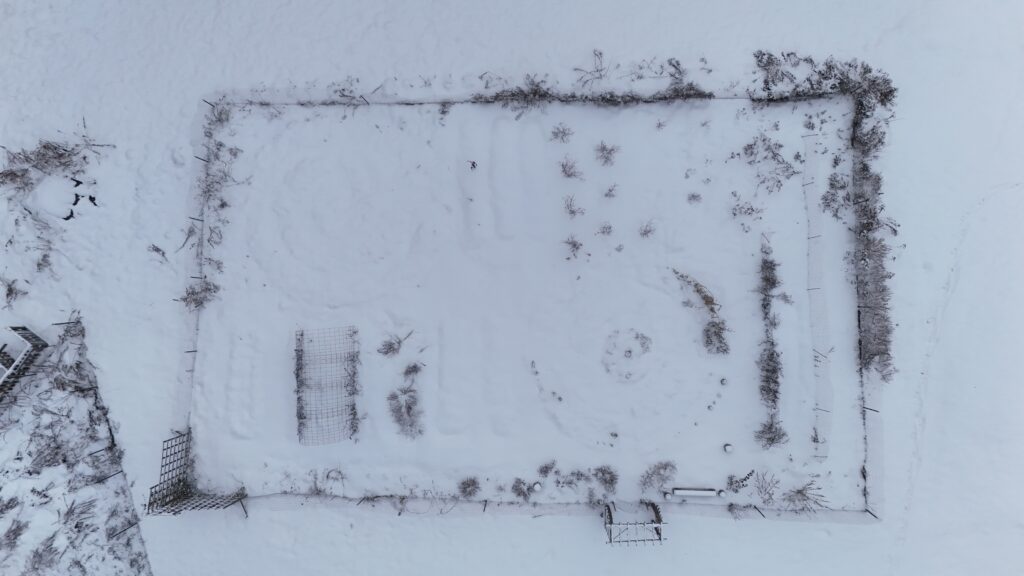
On the strawberry bed (the large spiral in the upper left corner) we add hay over the plants for the winter to protect them a little from the harsh conditions. The plant matter and the hay help to also protect the soil over the winter. Then in the spring we will push back the hay around the plants and it will act as a mulch for the plants as they grow. This season the strawberry bed also got some new soil added on. When we were removing weeds some of them took the old soil with them!
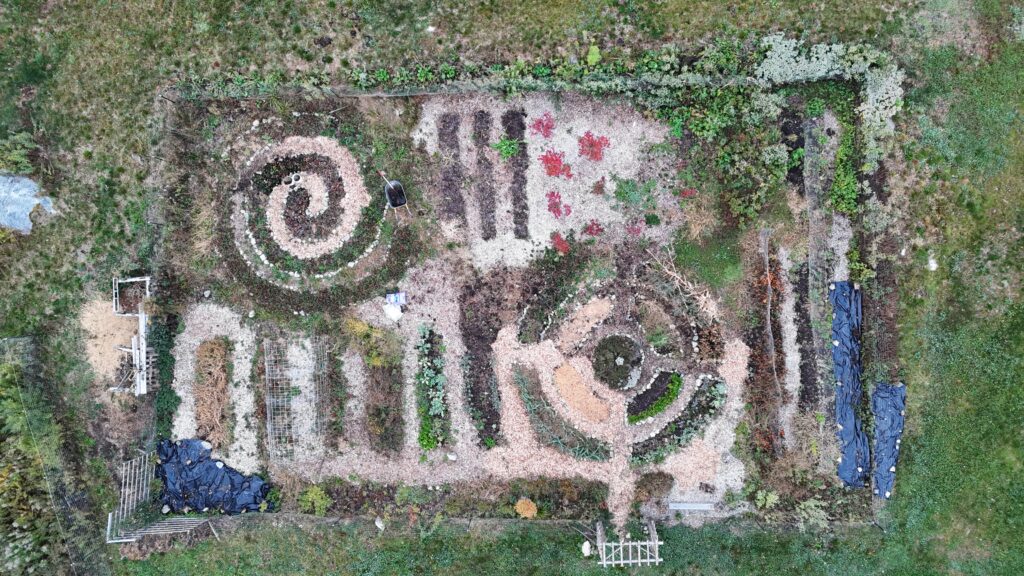
This season the snow got here before we were able to cover the strawberry bed with hay. It did end up melting and we were able to get the hay cover on once the snow was mostly gone. The snow acts as an insulator and as a mulch, but the strawberries like to be covered with something else before the snow.
One of the beds did get a cover crop this year, but that was because nothing was planted in the bed during the growing season and I did not want to soil to just stay bare. I had buckwheat seeds, so I put those in the bed. They grew and flowered and then the voles or the woodchuck started to snack on the flower stalks. In the end, I did not need to trim them down because the garden critters did it for me. I am glad that they left the root systems in the soil to help feed the microbes.
Cover crops have been something that I have struggled with here. We have an extremely short growing season here and the timing has been tricky. It will probably be something that will need to be done rotationally and as an interplanting with crops that we are growing. There is still so much to learn about growing here and the timing of everything. Now if only it would stop changing each year!